
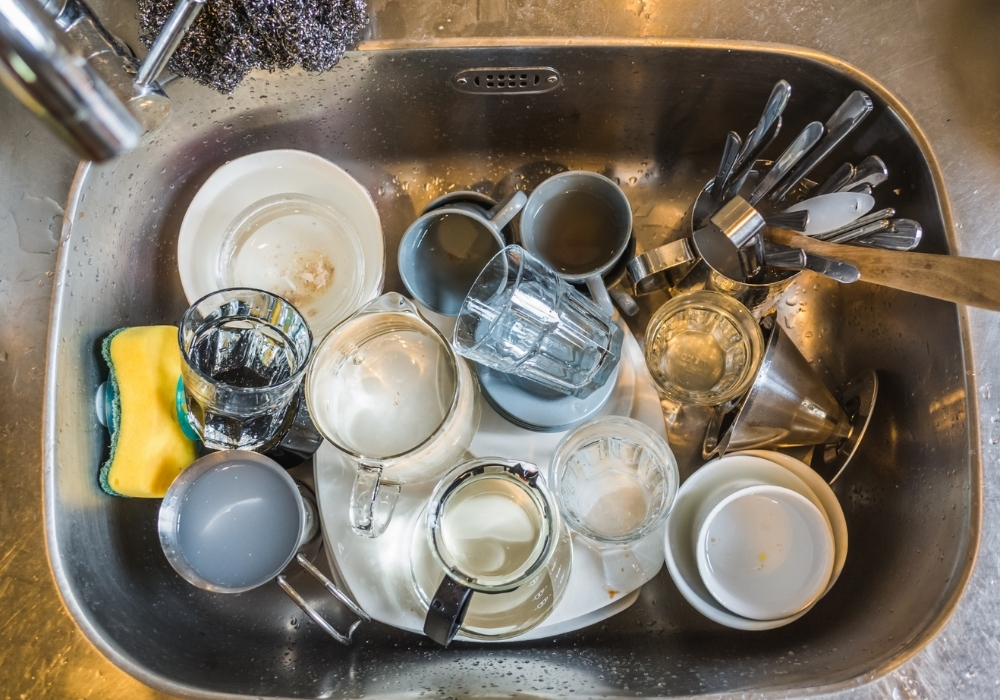
You walk into the office kitchen to grab your well-deserved afternoon cuppa, and there it is: the sink. It’s like a horror scene from The Walking Dead, except there’s no escape because you still need a clean mug. Okay, not all office kitchens are this horrific, but most are almost impossible to keep tidy. Think of the unclaimed Tupperware piling up in the corner, the splatter that’s been decorating the microwave since last Christmas, and the unpleasant smell that’s been lingering in the air since this morning.
The “Someone Else Will Do It” Trap
Everyone uses the office kitchen at some point during the day, but not everyone will follow the unspoken rules of keeping it tidy. All it takes is for one person to soak a mug in the sink, and before you know it, the sink is full of the office’s entire mug collection. Although it’s not one person’s fault, it does become everyone’s problem. While many office kitchens are kept clean by a cleaner or a professional cleaning team, it’s not usually the cleaning team’s job to wash dishes or to keep an eye on the food in the fridge. In fact, many cleaning companies state outright that these tasks aren’t included. Many people carry the mentality of “it’s not my kitchen, so why should I clean up after everyone else?” In 2024, InstantPrint surveyed 1,000 UK employees. Of those surveyed, 14% admitted leaving dirty dishes and mugs in the sink, while one in seven admitted leaving food in the fridge longer than necessary.
The Usual Suspects
It’s not only difficult to keep an office kitchen tidy, but it’s also almost impossible to keep track of what belongs to whom. With so many different personalities under one roof, the overloaded fridge, a piece of tissue on the floor or that empty milk container on the worktop become hard to account for. Everyone assumes that a more responsible colleague will take care of things. Regardless of how many times the kitchen is tidied or a spillage is wiped clean, some items have made it their permanent home.
The usual culprits include:
- The pile of unclaimed Tupperware and containers. Someone forgets their Tupperware in a corner of the kitchen, and soon there are twenty of them piled up, waiting to be picked up by their owners like eager schoolchildren.
- The empty milk container. It sounds easy, right? When you use the last bit of milk, throw the container away in the appropriate bin. Unfortunately, some colleagues would rather put it back in the fridge than take 10 seconds to dispose of it.
- The sticky worktops. This one is particularly painful for those who prefer their environment super clean. Although some people would clean the worktop without hesitation, most would just ignore it in the hope that someone else would “sort it”.
- The wet floor. Leaving a wet floor unattended can have serious consequences. If a colleague slips and hurts themselves, it can lead to HR procedures or even legal action. Giving the floor a quick mop immediately after a spill can save everyone a headache.
- The overloaded bin. There’s nothing pleasant about emptying a bin. But during the festive season, bins fill up faster and often overflow between cleans. Overflowing bins can leave lingering smells, which can put a damper on the office mood.
- The sponge that has seen better days. A 2017 German study found that used kitchen sponges can harbour up to 54 billion bacteria per cubic centimetre. The researchers recommended replacing sponges once a week to avoid harmful germs. A neglected sponge in the office kitchen can therefore spread far more than just an unpleasant smell.
The Consequences
Neglected kitchen areas can cause far bigger problems than just sticky worktops and a smelly fridge. They can have serious, long-term effects on staff, revenue and the business as a whole.
These include:
- Staff sickness. In 2019, a survey of 1,012 UK employees found that a whopping 46% of those surveyed had taken at least one sick day in the past year because of an unhygienic workplace. Furthermore, 34% of the workers blamed badly washed plates and mugs in the office kitchen for making them ill. This highlights the importance of keeping a hygienic work environment for the wellbeing of staff.
- Staff morale. An unkempt kitchen environment can have a negative effect on staff mood and morale. Over time, this can lead to stress, absence and even staff leaving to work elsewhere. A dirty office kitchen can also result in lower productivity and lost revenue.
- First impressions. There’s nothing worse than an important client visiting your premises and being greeted by a foul smell from the kitchen. They quickly decline the cup of coffee you offer because they’re already put off by the smell. They then turn down the deal you were certain you’d secured, and you never realise it was because of the negative first impression they had of the business.

The Solutions
The good news is that there’s a solution to every problem! Creating a clean and healthy office kitchen for employees isn’t rocket science. Simple, daily habits can turn the office kitchen from a horror scene to serenity.
- Appoint a rotating Kitchen Champion. This is the person who will be responsible for any stray items, such as the mysterious Tupperware and the pasta that has been in the fridge for the past two weeks. They can also send out a friendly email to colleagues when things get a bit messy in the kitchen, or praise them for keeping it tidy.
- Clear out the fridge once a week. A weekly fridge clear-out keeps bad odours away and the fridge fresh. A good idea is to send staff a reminder email, notifying them that any food or drinks left in the fridge will be disposed of. This could be part of the Kitchen Champion’s duties.
- Print out and put up a friendly reminder list. This can include things such as wiping the microwave immediately after any splatter, disposing of empty milk containers, keeping worktops clean, and not leaving dishes in the sink.
- Make tasks easy for staff. Prevention is better than cure, so why not get ahead of any issues before they occur? This includes providing a microwave cover to prevent splatter, disposable kitchen cloths to reduce the spread of bacteria and air fresheners for the bottom of the bin. These small changes will not only encourage staff to keep the office kitchen tidy, but also make it easier to stay on top of jobs that might otherwise be ignored.
Conclusion
A tidy kitchen can lift employees’ mood, improve concentration and productivity, and make staff more inclined to keep this space clean. As a result, keeping the office kitchen tidy becomes a team effort rather than a burden. The cleaning team can still assist with disinfecting surfaces, keeping floors clean and emptying bins. However, to keep the office kitchen hygienic and the team happy, it is essential that everyone does their part between regular cleans. After all, the only thing lurking in the office kitchen should be your afternoon cuppa.